
Many families assume probate is a bureaucratic trap designed to drain their inheritance. That's not quite right. Probate exists for specific legal reasons: validating a will, protecting creditors, and making sure property passes to the right people.
This article breaks down what probate actually does, how the process unfolds, which assets get pulled into it, and how a properly funded living trust can help your family skip it entirely.
Key Takeaways
- Probate is the court-supervised process that validates a will, appoints an executor, and legally transfers a decedent's property
- Core purposes: protect creditors, verify the will, and ensure lawful distribution
- Jointly-owned property, named-beneficiary accounts, and trust assets typically skip probate entirely
- The process commonly takes six to eighteen months and can reduce estate value through attorney and court fees
What Is the Purpose of Probate?
Probate is the court process that validates a decedent's will (or, if there's no will, applies your state's intestate succession laws) and oversees how assets get distributed. According to the American Bar Association, it's the formal mechanism that gives legal recognition to a will and installs an executor to administer the estate.
Probate serves three core functions:
- Authenticates the will — the court confirms it's genuine and legally valid
- Appoints a personal representative — an executor (if named in a will) or administrator (if there isn't one)
- Grants legal authority — the representative can't act on the estate's behalf until the court issues "Letters Testamentary" or "Letters of Administration"
Beyond those steps, probate also protects the people with a stake in the estate:
- Creditors: California Probate Code requires formal notice to known creditors and a defined claims period before distribution, so debts are not skipped in favor of inheritances
- Beneficiaries: Assets go out as the will specifies, or under intestacy law if there is no will, not by informal family decision
- Public record trade-off: Anyone can look up what the decedent owned and who inherited it, which is why privacy-minded families often plan to avoid probate
Cost is another practical factor. California law sets ordinary attorney compensation on a sliding scale: 4% of the first $100,000, 3% of the next $100,000, and down to 0.5% for larger amounts.
Nolo's 2025 estimate puts legal fees on a $500,000 California estate at roughly $13,000, before court costs, appraisal fees, and executor compensation.
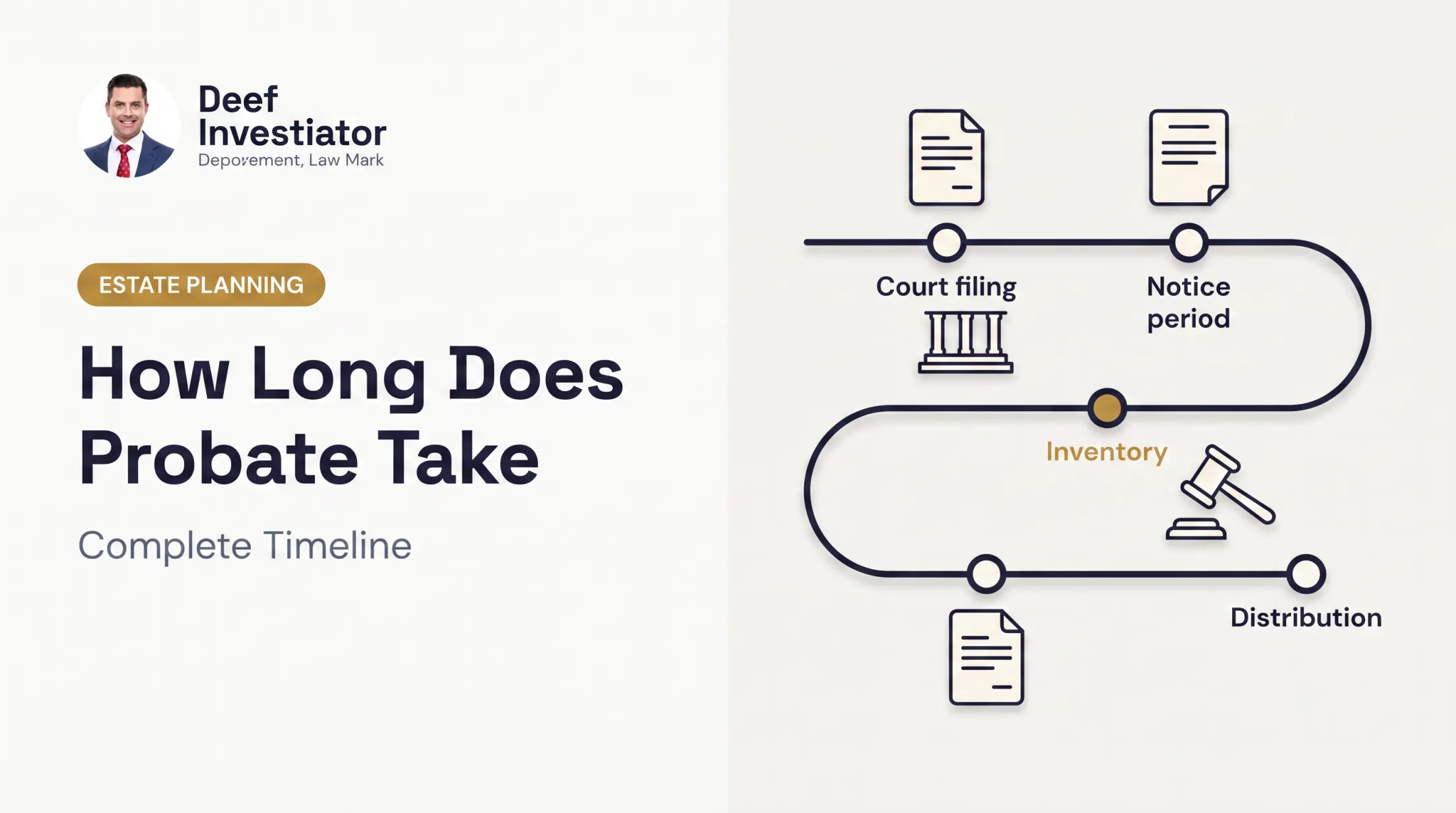
How the Probate Process Works
Filing the Petition and Opening the Estate
The process begins when a petitioner—usually the person named as executor, or another interested party—files a petition at the local probate court, along with the will if one exists. The court reviews the petition, gives notice to interested parties, and holds a hearing.
Once approved, the court issues Letters Testamentary (if there's a will naming an executor) or Letters of Administration (if there isn't). Without these letters, nobody has legal authority to touch the estate's assets. Being named in a will isn't enough on its own.
Administering the Estate
This is the heavy-lifting phase. The executor must:
- Inventory all estate assets, from bank accounts to real estate
- Obtain professional appraisals for real estate, businesses, or valuable personal property
- Notify creditors and heirs formally
- Pay valid debts, taxes, and creditor claims
Nothing gets distributed to beneficiaries until debts and taxes are settled. Skip this step, and an executor can be held personally liable.
Closing the Estate
Once obligations are paid, the executor files a final accounting with the court. After the judge approves it, the executor distributes remaining assets and the estate officially closes.
Timeline: The ABA reports an average of six to nine months for a typical estate. California Courts' own guidance puts formal probate at nine to eighteen months, sometimes longer for complex or contested estates. Either way, probate is not quick—which is why many families use living trusts and other tools to keep assets out of court.

What Assets Go Through Probate (and What Doesn't)
Not every asset you own ends up in probate court. It depends entirely on how the asset is titled.
Typically requires probate:
- Solely-owned real estate
- Individual bank and brokerage accounts
- Vehicles titled only in the decedent's name
- Personal property without a beneficiary designation
Usually bypasses probate:
- Life insurance and retirement accounts with named beneficiaries
- Jointly-owned property with right of survivorship
- Payable-on-death (POD) and transfer-on-death (TOD) accounts
- Assets already titled in a living trust
Not every inheritance requires probate. Only solely-titled assets without a beneficiary or joint owner typically need court involvement. If your mom named you as beneficiary on her IRA, that money comes to you directly, with no court required.

So who owns the family home while probate is pending? Legal title sits with the estate, managed by the executor, until the court approves final distribution. The executor can maintain the property, pay its mortgage and taxes, and even sell it if needed. They cannot simply hand over the keys until probate concludes.
One point still trips up most people: having a will doesn't mean you skip probate. A validly signed, even registered, will still typically needs to go through probate to legally transfer solely-owned assets. The will is the document probate court uses, not a bypass around it.
Should You Try to Avoid Probate?
Probate avoidance usually comes down to three tools:
- A properly funded revocable living trust
- Beneficiary designations
- Joint titling
Of these, the living trust does the most heavy lifting for real estate and other major assets.
A will alone does not avoid probate. A will only becomes relevant once you're already inside the probate process. If avoiding court is the goal, a funded trust is what actually keeps assets out of it.
For California homeowners who want that setup without a full law-firm engagement, HomeTrust can help. Marco Mariani, a Licensed Document Assistant (LDA #231), has prepared more than 10,000 California trusts since 1992. The package typically includes a revocable living trust, pour-over will, durable power of attorney, and advance healthcare directive, so assets can pass privately without court involvement or a public probate file.
The step most people skip: funding
Here's what trips up a lot of DIY estate plans: signing a trust document doesn't automatically put your assets in it. You have to actually retitle things — a process called "funding" the trust. Skip this step, and your assets stay exposed to probate no matter how nicely worded your trust is.
Funding typically involves:
- Transferring the home by deed — recording a new grant deed naming the trust as owner, plus a Preliminary Change of Ownership Report
- Retitling bank accounts — using a Certificate of Trust to change ownership at each bank or credit union
- Updating brokerage accounts — changing the account holder to the trust
- Handling retirement accounts separately — 401(k)s and IRAs generally stay in your name; you update the beneficiary designation instead, since moving them into a trust can trigger immediate income tax

HomeTrust's individual trust package is priced starting at $409 / settlor plus recording and notary fees per Settlor, and includes step-by-step funding guidance plus deed preparation. Documents are typically ready in 1–3 business days. For couples, the joint package is $618 plus fees.
Existing trusts that were never properly funded are a common problem. Attorney-prepared trusts go unfunded an estimated 80–90% of the time, and many can be corrected rather than rebuilt from scratch.
Frequently Asked Questions
What happens during probate?
The executor files a petition with the court, is appointed and granted legal authority, pays the estate's debts and taxes, and then distributes remaining assets under court supervision.
Does every inheritance have to go through probate?
No. Only solely-owned assets without a named beneficiary or joint owner typically require probate. Assets with beneficiary designations or joint titling usually pass directly to the recipient.
What assets don't go through probate?
Life insurance and retirement accounts with named beneficiaries, jointly-held property with survivorship rights, and assets already titled in a living trust generally bypass probate.
Is probate necessary for a registered will?
Yes. A will doesn't avoid probate. It's the document the court validates during the process. Having a will just means the court knows how you wanted assets distributed.
Who owns a home during probate?
Legal title stays with the estate, managed by the executor, until the court approves final distribution to the heirs named in the will or under intestacy law.